

You walk into a spa. The lighting is harsh. The walls are cold white. The furniture feels like a waiting room.
You want to leave immediately.
Now imagine the opposite. Soft light on textured stone. The whisper of linen curtains. A scent of cedar and sea salt. Your shoulders drop before you even check in.
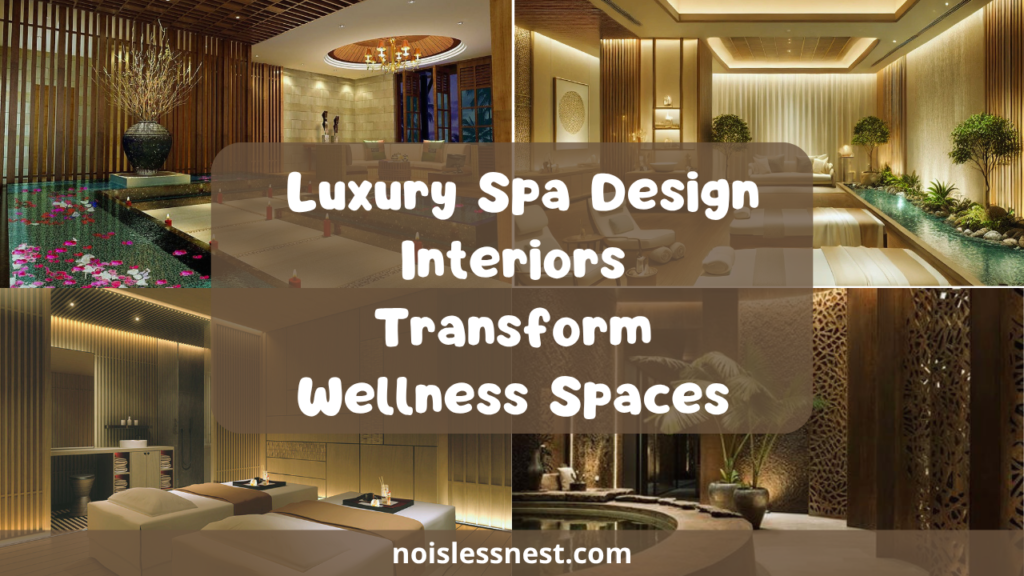
That feeling isn’t accidental. It’s Luxury Spa Design Interiors carefully crafted to heal before a single treatment begins.
In this guide, you’ll learn seven professional strategies used by top resort designers. Whether you own a wellness business, design for clients, or dream of a spa-like home, these ideas will transform any space into a sanctuary.
Let’s begin your journey to calmer, more elegant interiors.
1. Start with the Senses: The Psychology of Spa Design
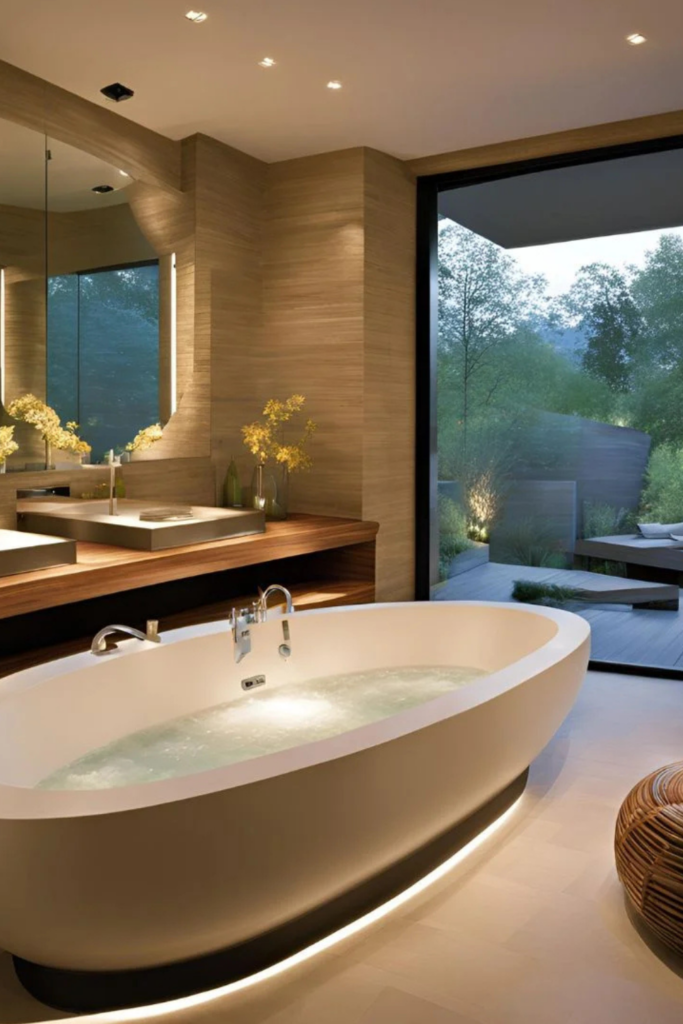
Luxury isn’t about expensive marble. It’s about how a space makes you feel.
Luxury Resort Spa Interiors prioritize sensory decompression from the very first step. Your brain needs a signal that says “you are safe here.”
Here’s what that looks like:
- Sight: Soft, diffused lighting. No harsh shadows.
- Touch: Warm, natural materials against the skin.
- Sound: Absorbed echoes. No clattering tiles or buzzing lights.
- Smell: One subtle signature scent. Never competing fragrances.
worthy tip: “The best spa designers start with a blindfold. If it doesn’t feel good with eyes closed, it doesn’t belong.”
When you layer these four senses, your space stops being a room and becomes an experience.
2. The Neutral But Never Boring Color Palette
Most people think “spa colors” mean pale blue or mint green. That’s dated.
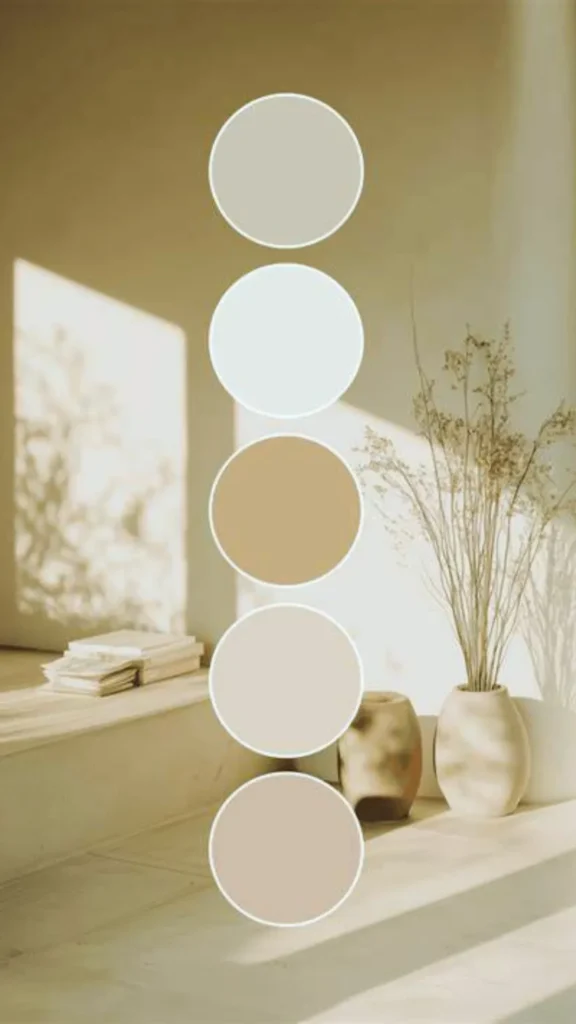
True Modern Spa Interior Concepts use a sophisticated palette of warm greiges, cream, taupe, and deep charcoal plus one unexpected earthy accent like terracotta or sage.
Why? Because cool blues can feel clinical. Warm neutrals feel like a hug.
Your professional spa palette:
| Surface | Recommended Color |
|---|---|
| Walls | Warm greige or limewashed cream |
| Flooring | Undyed oak or matte porcelain in sand |
| Textiles | Undyed linen, raw cotton, hemp |
| Accents | One muted earth tone (clay, moss, rust) |
worthy tip: “Paint your ceiling two shades darker than your walls. It lowers the visual height and makes the room feel cocoon-like, instantly more intimate.”
Avoid stark white at all costs. It reflects too much light and creates glare, which is the enemy of relaxation.
3. Water as Design: Hydrotherapy Elements That Wow
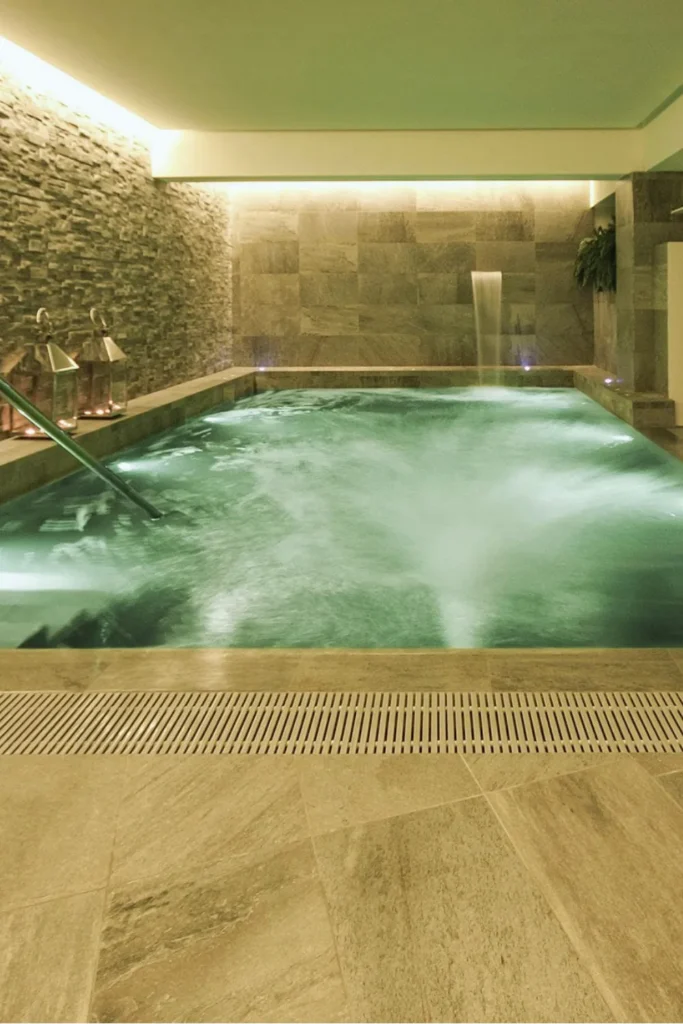
Water isn’t just for pools and showers. In Luxury Spa Design Interiors, water becomes a visual and auditory anchor.
Consider these hydro‑design elements:
- Floating walls with thin water sheets (silent, no splash)
- Reflecting pools under glass flooring in reception areas
- Steam‑infused alcoves with bench seating and soft LED
- Rain curtains at transition points between dry and wet zones
Even a small tabletop fountain with river stones can shift the energy of a treatment room.
worthy tip: “The most relaxing water feature makes no splashing sound just a gentle, continuous sheet. Silence is the true luxury.”
And here’s a pro secret: always place water elements where natural light can hit them. The dancing reflections on your ceiling become living art.
4. Lighting That Breathes: Circadian & Layered Systems
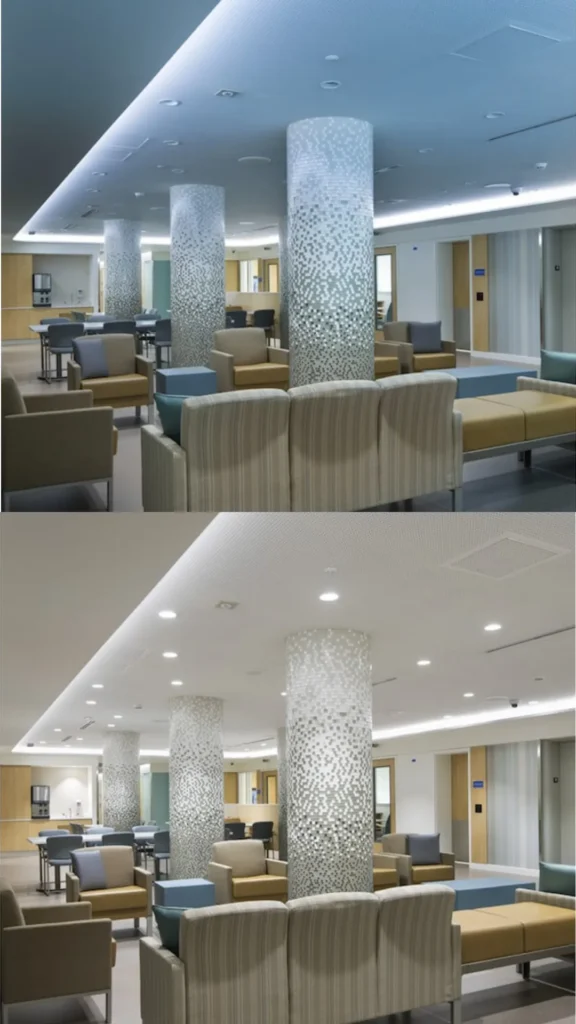
Harsh overhead lights destroy a spa faster than anything else.
Luxury Resort Spa Interiors use three layers of lighting, each on a separate dimmer and timer to follow the body’s natural rhythms.
Morning (gentle awakening):
- Cooler white (3000K) near windows
- Indirect cove lighting at 40% brightness
Midday (calm alertness):
- Warm ambient at 60%
- Task lighting for therapists (adjustable, pointed away from client’s face)
Evening (deep rest):
- All lights below 30%
- Candles or flame‑effect LEDs only
- No overhead fixtures on
worthy tip: “Install a ‘sunset’ button on your lighting panel. One press dims everything to 15% over 60 seconds, it signals the nervous system to downshift.”
Also, never use 5000K “daylight” bulbs. They mimic office environments and increase cortisol.
5. Texture Layering: The Invisible Luxury
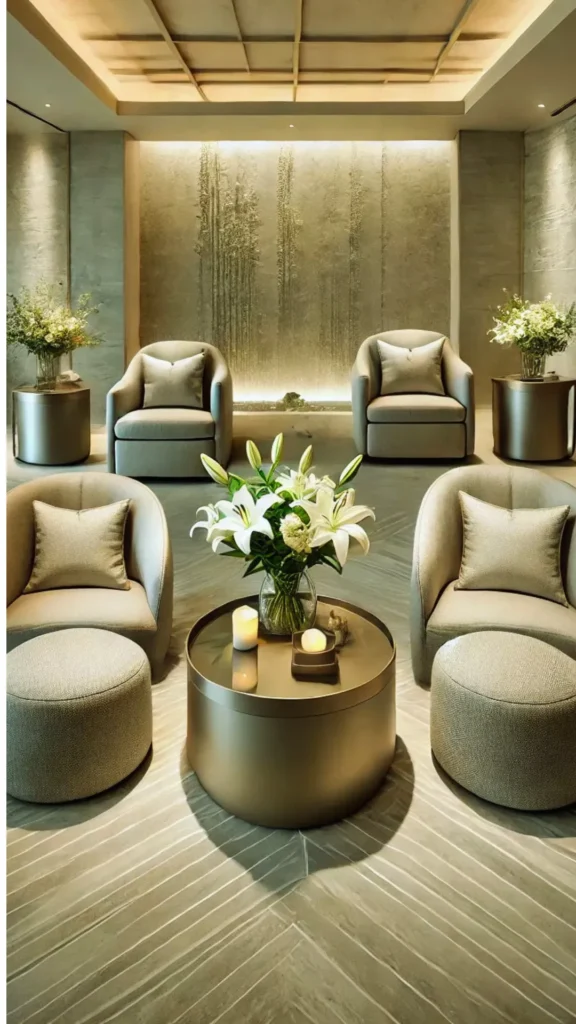
You can’t photograph texture well. But your clients will feel it immediately.
Modern Spa Interior Concepts rely on a hierarchy of tactile experiences:
Against bare skin (towels, robes, sheets):
- Organic cotton, bamboo silk, or washed linen
- Never bleached white undyed or oat
Under bare feet (floors, mats, rugs):
- Heated stone or polished concrete with radiant heat
- Thick wool or coir mats at transition points
At rest (seating, loungers, headrests):
- Leather that warms to body temperature
- Bouclé or alpaca wool cushions
worthy tip: “Charge clients more by spending on what touches skin. The difference between 20 and 80 towels is how they remember you.”
Texture memory is real. A client may not say “lovely upholstery,” but they will book again without knowing why.
6. Biophilia 2.0: Living Walls & Calming Vertical Gardens
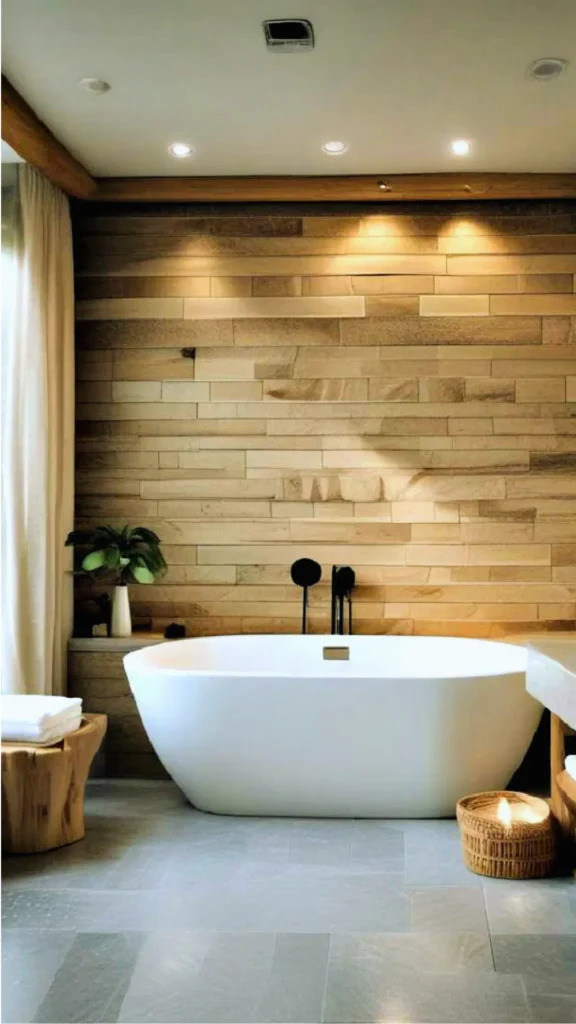
Plants are expected. But Luxury Spa Design Interiors take biophilia further.
Instead of scattered potted plants, think architectural greenery:
- Living walls with integrated irrigation and soft backlighting
- Moss walls (preserved, zero maintenance) in high‑humidity zones
- Ferns cascading from ceiling beams or shelf ledges
- Single statement trees (olive, fiddle leaf, or dwarf citrus) in stone planters
Choose plants for their shape and movement, not just color. Grasses that sway in airflow. Vines that trail gently. Leaves that rustle.
worthy tip: “Place one large plant where it casts a moving shadow on a blank wall. It becomes the only art you need.”
Avoid flowers with strong pollen or scent. Your signature fragrance should come from a diffuser, not competing blooms
7. Furniture That Disappears: Minimalist Function
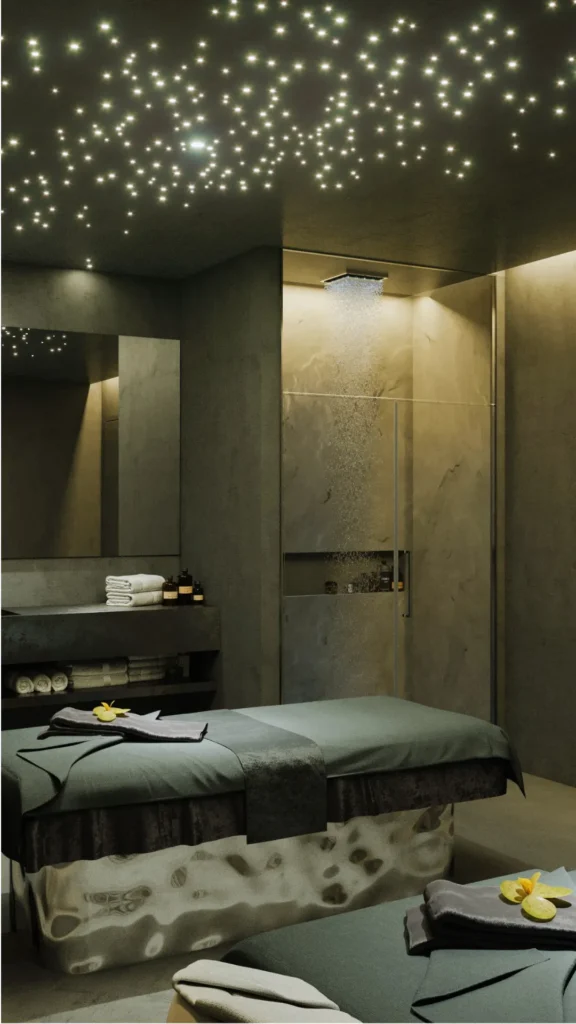
Clutter breaks serenity. Every piece in a luxury spa must earn its place.
Luxury Resort Spa Interiors use furniture that serves one purpose perfectly and then visually retreats.
Key principles:
- Low profiles: Seating below 18 inches feels grounded.
- Hidden storage: Everything inside cabinets. Nothing on counters.
- Curved edges: No sharp corners. Soft rectangles or full circles.
- No logos, no branding: The space itself is the brand.
For treatment rooms: a seamless flip‑top table with built‑in linen storage. For lounges: deep, armless chairs that don’t block sightlines. For reception: a single organic wood slab on hidden legs.
Pin-worthy tip: “If you can see a power cord, a remote control, or a product bottle you’ve failed. Hide everything.”
When furniture disappears, the client’s mind appears, fully present and ready to heal.
Table of Contents
You might also like: noiselessnest.com/ultimate-neutral-palette-interiors
CTA
Discover how Luxury Spa Design Interiors can elevate your brand experience. Explore our design services and create a space your clients will never forget. Whether you’re building a new wellness retreat or refreshing an existing spa, we’re here to bring calm to every corner.