


Ever woken up feeling groggy despite a full night’s sleep? Or found yourself battling a mid-afternoon slump in a beautifully designed room? The culprit might not be your mattress or your coffee intake, it could be your lighting. Circadian rhythm lighting design is revolutionizing how we think about interior spaces, shifting the focus from mere illumination to biological alignment. It’s about creating environments that work with your body, not against it.
In this guide, we’ll explore seven actionable ways to implement circadian rhythm lighting design in your home or projects. You’ll learn how to harness human-centric lighting design to improve your sleep, elevate your mood, and boost your daily productivity, all while creating a stunning, modern aesthetic.
1. Start with Tunable White Fixtures
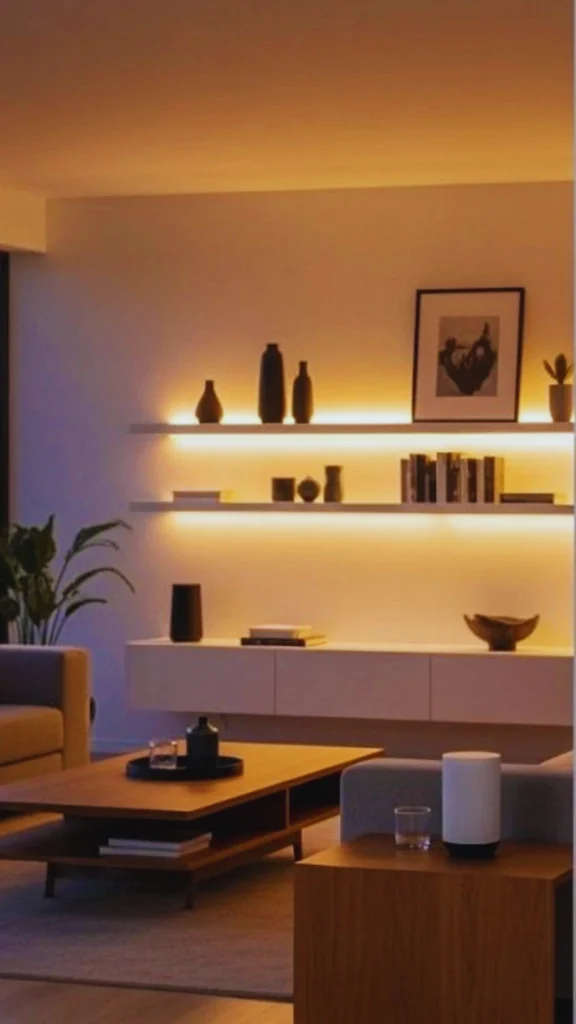
The foundation of any circadian rhythm lighting design is the ability to change color temperature. Unlike standard bulbs that emit a fixed light, tunable white luminaires can shift from a warm, candle-like glow to a crisp, energizing cool white.
For a truly effective biological rhythm lighting system, look for fixtures that can adjust from around 2700K (warm) to 6500K (cool). This range allows you to mimic the sun’s natural arc. In the morning, a cooler, blue-enriched light (around 5000K) signals to your brain that it’s time to wake up, suppressing melatonin and promoting alertness. As the day progresses, the light gradually warms, culminating in a 2700K glow in the evening that encourages relaxation and prepares your body for sleep.
Worthy Tip: “The secret to circadian lighting isn’t just one bulb, it’s a spectrum that shifts with the sun.”
2. Automate with Smart Controls and Astronomical Clocks
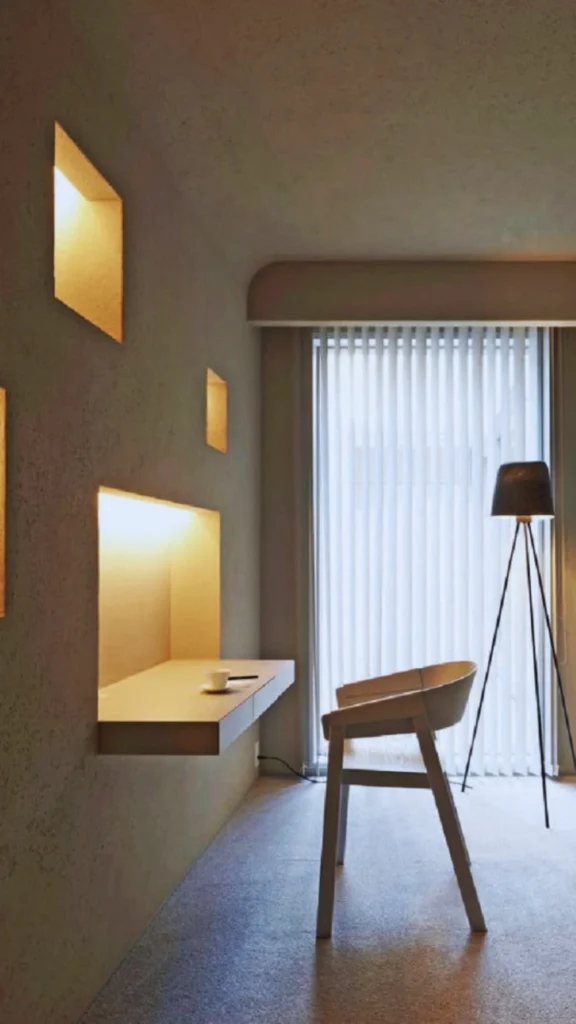
To truly benefit from human-centric lighting design, you need automation. Manually adjusting your lights throughout the day is impractical and quickly becomes a chore. The beauty of modern smart systems is that they can do the work for you.
Integrate your lighting with a smart control system that uses an astronomical clock. This feature automatically adjusts your lighting based on the sunrise and sunset times for your specific location, ensuring your indoor environment stays in sync with the natural world outside. For an even more sophisticated approach, some systems now use AI to factor in real-time weather and UV data, adjusting color temperature based on cloud cover to create the most natural feel possible.
Worthy Tip: “The best circadian lighting is the kind you never have to think about. Set it and forget it with smart automation.”
3. Plan Layered Lighting Zones

Not every room in your house serves the same purpose, and your circadian rhythm lighting design should reflect that. A “one-size-fits-all” approach doesn’t work. Instead, create distinct lighting zones based on how each space is used and at what time.
Think about the function of each area:
- Morning Zones (Kitchens & Bathrooms): Need bright, cool light to energize you for the day ahead.
- Work Zones (Home Offices): Require focused, alerting light to maintain productivity and concentration.
- Evening Zones (Living Rooms & Bedrooms): Benefit from warm, dim, and relaxing light to signal to your body that it’s time to wind down.
By zoning your home, you can create an environment that intuitively supports your biological rhythm lighting needs, whether you’re cooking breakfast, powering through a work project, or settling in with a book.
Worthy Tip: “Zone your lighting by activity and time of day. Your kitchen at 7 AM should feel completely different from your living room at 10 PM.”
4. Prioritize Vertical Illumination
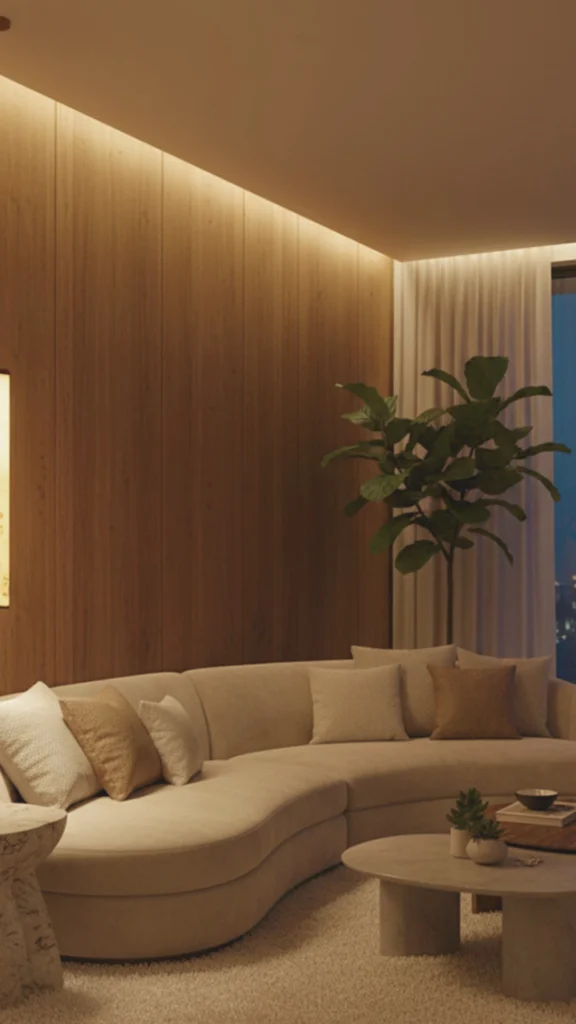
When we think about lighting, we often focus on how much light hits the floor or a tabletop. However, for circadian rhythm lighting design, vertical illumination, the light that reaches your eyes, is far more critical.
Our bodies register light through our eyes, and the suprachiasmatic nucleus (SCN) in our brain uses these signals to regulate our circadian rhythm. To effectively cue your biological clock, you need light at eye level. In the morning, aim for 300-500 lux of vertical light for 2-3 hours. This might mean using wall washers, pendants, or floor lamps that project light upwards, ensuring it reaches your face. This simple shift can dramatically improve how alert you feel in the morning and how well you sleep at night.
Worthy Tip: “Don’t just light your floors, light your face. Vertical illumination is the key to waking up your brain.”
5. Start with the Bedroom, Your Sanctuary
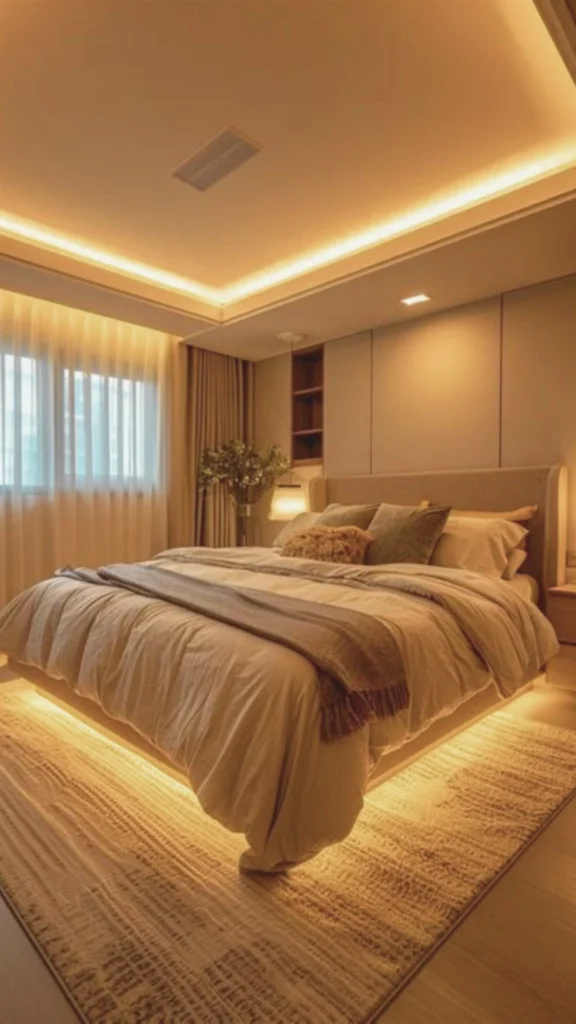
If you can only implement one aspect of circadian rhythm lighting design, make it your bedroom. This is where your body prepares for sleep and recovers overnight, making it the most critical space for biological rhythm lighting.
A luxury bedroom lighting plan should be gentle and intuitive. It should feature a warm, dim evening setting for winding down (think 2700K or lower) and a soft, gradual morning pathway that eases you awake without a harsh jolt. Consider a sunrise alarm clock as a standalone, low-tech option to start your day calmly. The goal is a serene environment that actively supports your sleep-wake cycle, turning your bedroom into a true wellness sanctuary.
Worthy Tip: “Your bedroom is your biological command center. Design its lighting for calm, rest, and a gentle dawn.”
Finally: It’s Time to Design for Your Biology
Circadian rhythm lighting design is more than a trend, it’s a fundamental shift in how we approach interior spaces. By embracing human-centric lighting design, you’re not just upgrading your home’s aesthetic; you’re investing in your health, mood, and daily performance. With the seven strategies above, you can begin creating a home that truly nurtures your well-being, one that understands the day and moves with it, not against it.
Table of Contents
You might also like: https://noiselessnest.com/9-ways-to-master-luxury-mountain-home-interiors/
You might also like: https://noiselessnest.com/master-luxury-container-home-design/
You might also like: https://noiselessnest.com/ultimate-neutral-palette-interiors/

